12K vs 18K Carbon Padel Racket: What the Weave Count Means for Your Game
Carbon has become the material of choice in serious padel rackets. Walk into any specialist retailer and the shelves are dominated by it. But the label "carbon" covers a wide range of constructions, and not all carbon rackets perform the same way.
The number that matters most is the filament count in the weave: 3K, 6K, 12K, 18K. These figures describe the density of the carbon fibre layup, and the density has a direct effect on how the racket feels, how it transfers energy, and how it suits different playing styles.
This article explains what those numbers mean, why 12K and 18K represent the serious end of the padel carbon spectrum, and how to use that knowledge to choose the right racket for your game.
What does the K mean in carbon?
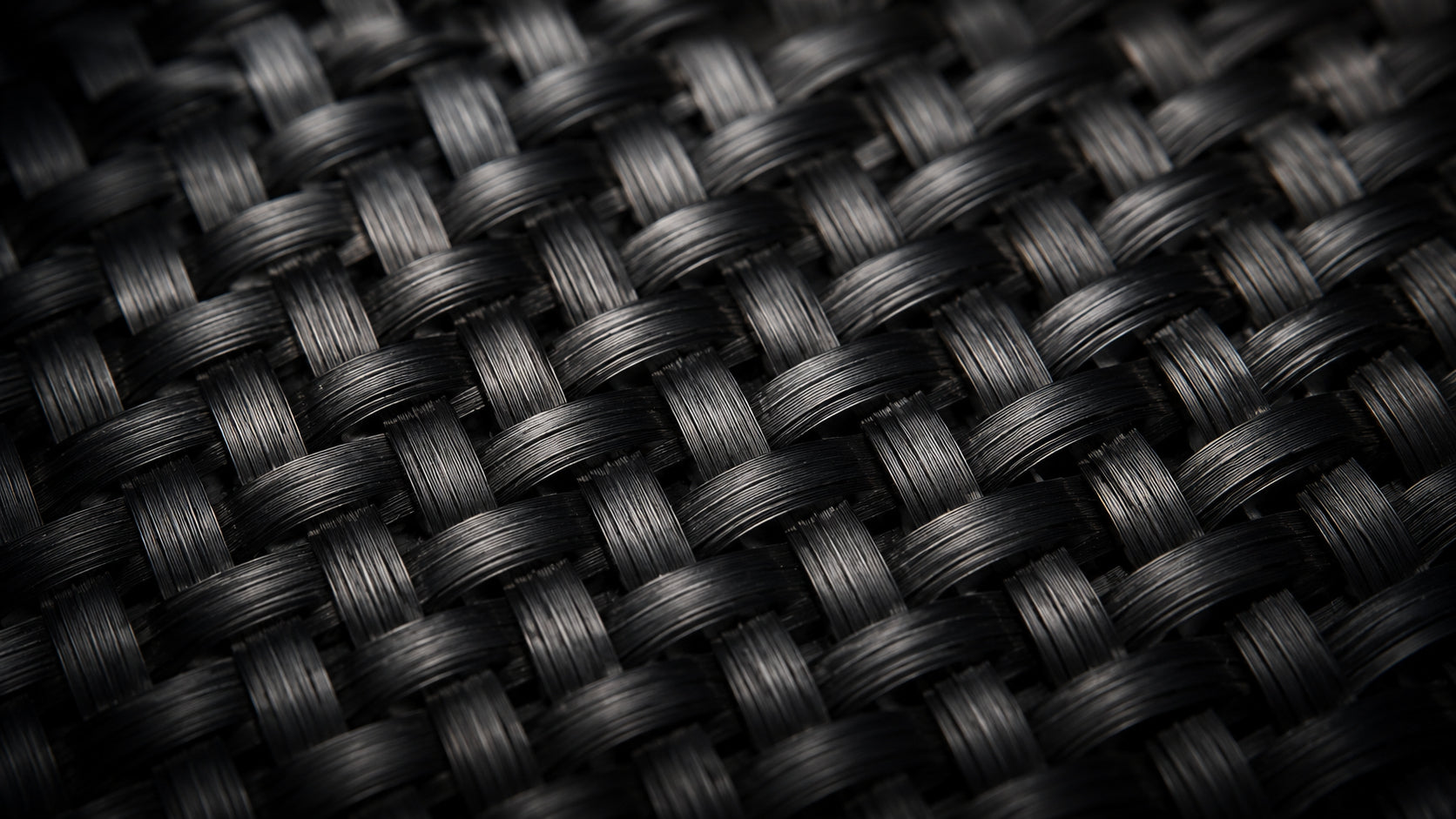
The K in 12K and 18K stands for thousands. It refers to the number of individual carbon filaments in each tow, or bundle, of fibre used to weave the racket frame. A 12K carbon tow contains 12,000 individual filaments. An 18K tow contains 18,000.
The higher the count, the denser the weave. More filaments per square centimetre of frame changes the structural properties of the racket in ways that translate directly to how it feels and performs on court.
For context, budget padel rackets often use 3K or 6K carbon, sometimes blended with fibreglass. The playability difference between a 3K and an 18K frame is substantial and felt immediately. The filament count is the most objective measure available when evaluating carbon quality.
What 12K carbon does
A 12K weave sits at a density that balances touch, control and feel. The filaments are tightly woven, but with enough space in the structure to absorb energy at contact rather than return it immediately.
The result is a racket that feels composed at the moment of impact. Players who use 12K carbon tend to describe it as having a stillness. Vibration is dampened more than in lower-count weaves. The sweet spot feels wider and more forgiving. Information comes back through the handle without noise. It is a material that rewards precision.
In practical terms, a 12K carbon padel racket suits the player who manages the point from the back court, uses touch and placement as weapons, and wants a racket that translates intention rather than amplifies force. The 12K weave is the natural companion to a control-oriented playing style.
What 18K carbon does
An 18K weave is denser. More filaments, tighter structure, different structural properties. Where 12K absorbs energy, 18K channels it. The transfer is faster and more reactive. At contact, the energy from the strike moves through the frame with less absorption and more return.
The effect is a sharper, more immediate response. Players using an 18K carbon padel racket describe it as faster: the ball leaves the face with more pace, and the feedback is more direct. It is a material for players who commit to the swing. The denser weave rewards full intention.
18K carbon is also slower and more demanding to lay correctly in production. The precision required at the manufacturing stage is higher, which is why it costs more to produce and tends to appear at the premium end of the market.
Why weave density matters more than the label
The K count matters because it is a structural fact about the racket, not a marketing designation. A higher number is not automatically better. It is a different tool for a different game.
A 12K carbon padel racket in the hands of a control player is the right choice. An 18K carbon padel racket in the hands of a power player is the right choice. Either racket in the wrong hands performs below both players' potential.
The weave also helps cut through marketing noise. Any manufacturer can claim "carbon construction." The question is which carbon. A 3K frame and an 18K frame share a material category and almost nothing else. Asking about the filament count is how a serious buyer separates engineering from aesthetics.
How the weave affects longevity and feel over time
A denser weave also holds its properties more consistently over time. Lower-count weaves, with more space in the structure, can become less responsive as the frame absorbs repetitive impact and the bonds between filaments loosen gradually. Higher-count weaves maintain the tighter structure for longer, which means the feel of the racket at month six is closer to the feel at day one.
For a player at a serious level, the consistency of feel matters as much as the initial response. A racket that performs differently from session to session makes shot decisions harder. A racket that performs the same way every time becomes an extension of the game.
The CPadel approach
CPadel builds both its rackets around hybrid carbon weaves at these two counts, each matched to a specific playing orientation.
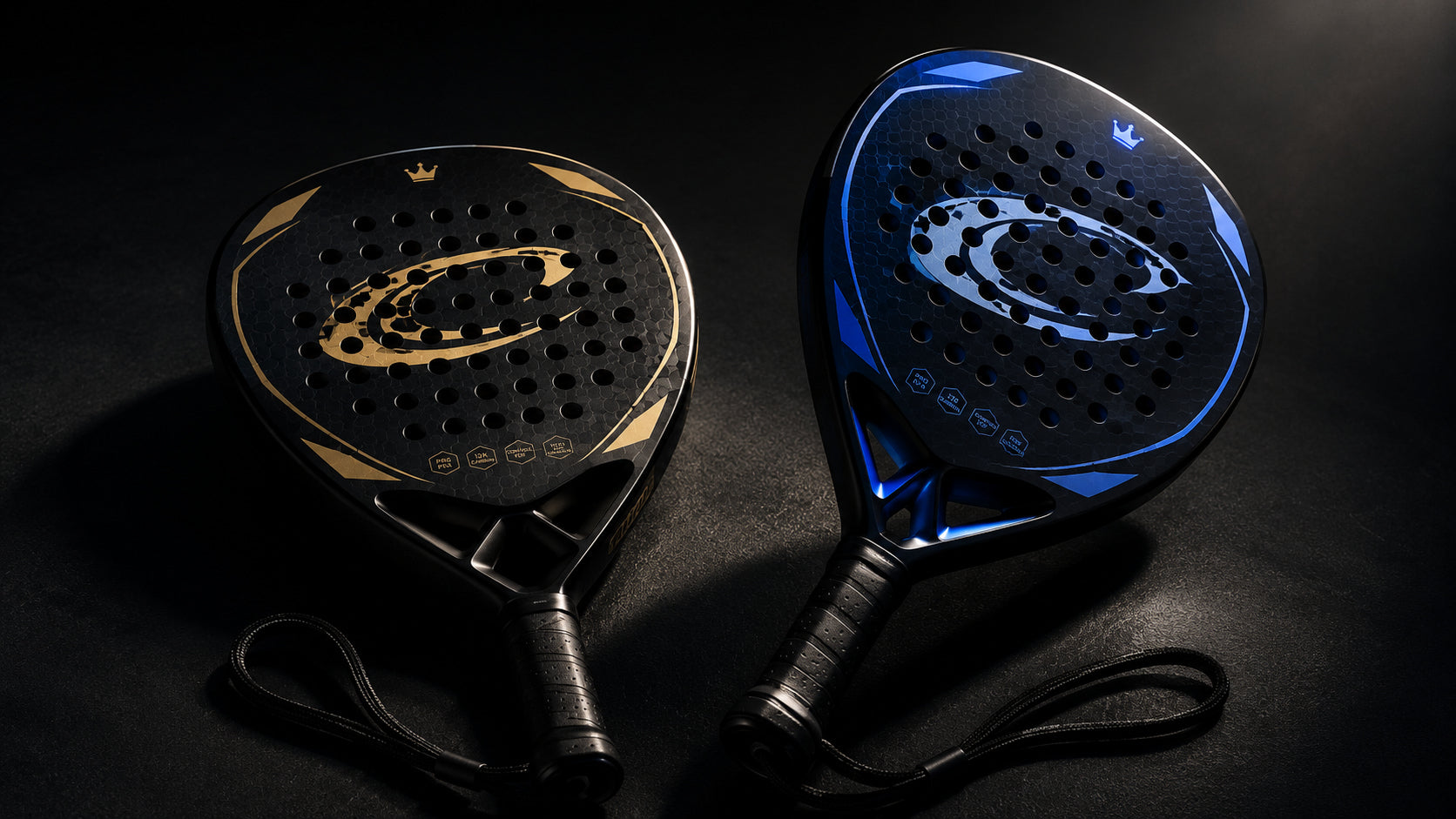
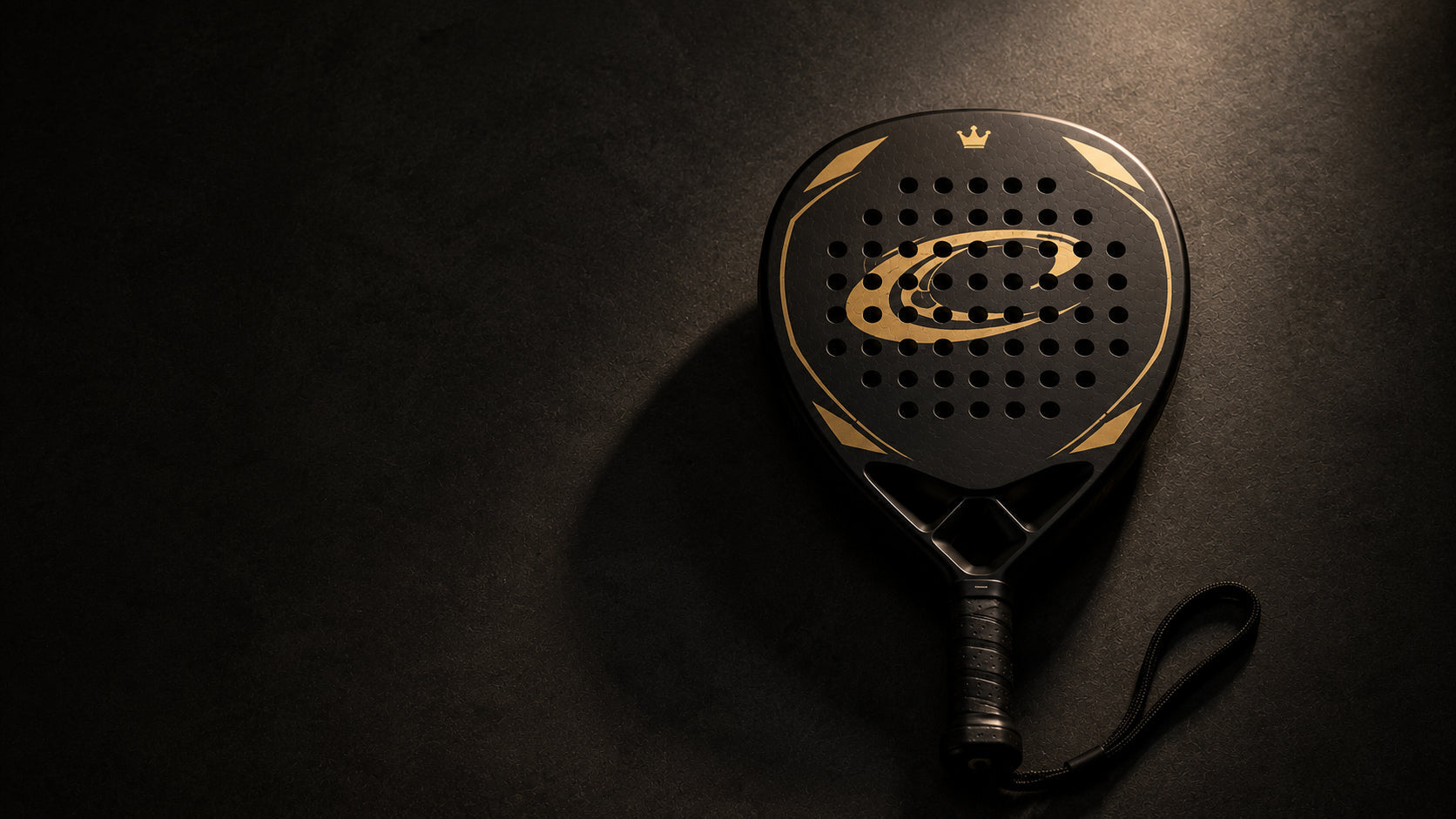
Elvora12 uses a 12K hybrid carbon weave across its full frame. The weave is specifically chosen for the stillness and touch it produces, making it the natural choice for the control-focused player who prizes placement over pace. Matte black and metallic gold. At £200, it is built to the standard the material deserves.
Ventor18 uses an 18K hybrid carbon weave. The tighter construction drives faster energy transfer and a sharper response through the strike. It is the racket for the player who attacks. Matte black, platinum silver and electric blue. At £265, the higher price reflects the additional time and precision required to lay the denser weave correctly.
Both rackets are part of Drop 01: The Inaugural. Fifty of each, numbered individually, never restocked.
Choosing by the carbon
If you understand the difference between 12K and 18K, the decision is simpler than it first appeared. The carbon count tells you something true about how the racket will feel. Trust that information and match it to how you play.
12K carbon for touch, control and placement. 18K carbon for pace, power and the decisive swing. Two materials, two games, one standard of construction.
Discover Elvora12 for 12K carbon control. Discover Ventor18 for 18K carbon power. Both available in Drop 01: The Inaugural, limited to 50 of each.
Frequently Asked Questions
What does 12K mean in a padel racket?
12K refers to the carbon fibre filament count in the weave. A 12K carbon racket is built with tows (bundles) of 12,000 individual carbon filaments. The higher the filament count, the denser the weave. 12K carbon produces a more uniform energy transfer at contact, resulting in a composed, touch-oriented feel suited to control play.
Is 18K carbon better than 12K carbon in a padel racket?
Not better, different. 18K carbon is denser and more reactive, which produces faster energy transfer and more pace off the face. It suits a power-oriented playing style. 12K carbon absorbs more energy at contact, producing a cleaner, more controlled response. The right carbon depends on how you play, not which number is higher.
Why is an 18K carbon padel racket more expensive than a 12K?
An 18K carbon weave is slower and more demanding to lay correctly in production. More filaments per tow means a tighter, denser structure requiring greater precision at the manufacturing stage. The higher price reflects the additional production time and skill involved, not just the material cost.
About CPadel
CPadel is a UK family padel racket brand, releasing seasonal drops of carbon-constructed rackets. Drop 01: The Inaugural features two rackets: Elvora12 (12K hybrid carbon, control, £140) and Ventor18 (18K hybrid carbon, power, £180). Both are limited to 50 units, numbered individually and never restocked.